
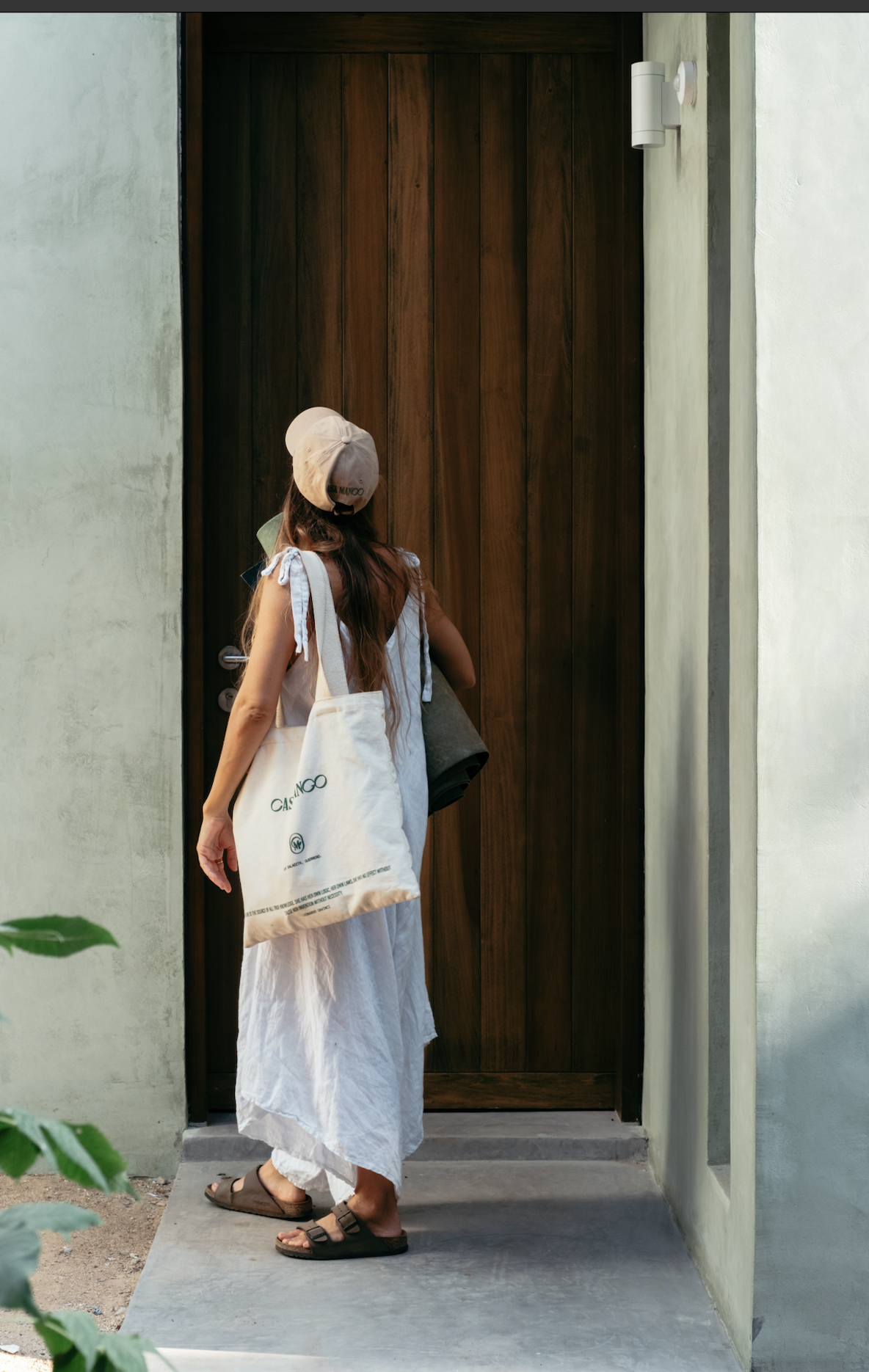
Owning a home on Mexico's Pacific coast is the easy part. Here's what happens after you sign.
Most people who buy property in Saladita arrive with the same picture in their head: a quiet stretch of coast, mornings in the water, a home that pays for itself when they're not in it. The first part is straightforward. Saladita delivers the wave, the pace, the light. The harder question, the one that surfaces somewhere between the offer letter and the closing, is the second one. What actually happens to the house the other forty weeks of the year?
For most coastal investments in Mexico, the answer is some version of figure it out. You fly down quarterly. You hire a local caretaker who may or may not answer the phone. You list on Airbnb and hope. You learn, usually the hard way, that vacation rental income is not passive.
Casa Mango is built differently. Every home in the development comes with a professional hospitality operator already in place: Habitante, a boutique management group that runs the rentals, the guest experience, and the back-office side of ownership as a single integrated service. You own the asset. They run it.
What "professionally operated" actually means
The phrase gets used loosely in real estate marketing, so it's worth being concrete. Habitante's role across Casa Mango spans three areas that, in most coastal investments, owners end up patching together themselves:
Operations. Hotel-grade housekeeping between stays. Preventive and corrective maintenance. Guest screening and security. 24/7 concierge. Welcome kits, linens, amenities. The small details that determine whether a guest leaves a five-star review or a one-paragraph complaint.
Revenue management. This is the part most owners don't realize they're missing until they look at year-end numbers. Habitante uses AI-assisted dynamic pricing to set rates by season, day of week, lead time, and market demand, and distributes listings across more than thirty channels, not just Airbnb. The work of pricing a property for the actual market, every day of the year, is full-time. It isn't something a remote owner can do well from another country.
Administration. Monthly statements, owner portal with full visibility into bookings and revenue, payment processing, operating budgets, and the kind of transparent reporting that lets you actually see what your home is doing.
What this means for an owner
The practical implications are simple. You don't manage cleaners. You don't field guest messages at 11pm. You don't price your own calendar. You don't negotiate with platforms or chase payments. You receive monthly reports and revenue, and you have a home waiting for you whenever you want to use it yourself.
For buyers comparing Casa Mango to other coastal opportunities in Saladita, Troncones, Sayulita, or further afield, this is the variable that's easy to underweight at the offer stage and impossible to ignore once you own. Two homes with identical purchase prices and identical locations can produce dramatically different results depending on who's running them. Most coastal markets in Mexico don't have a professional operator option at all. The default is self-management, which works for some owners and quietly drains others.
Buying the home is one decision. The other is who runs it.
Casa Mango is built around the idea that those two decisions shouldn't be separate. Ownership comes with operations already solved: by a team whose only job is to make the house perform without making it your second job.
If you're considering a home at Casa Mango and want to understand how Habitante's management works in practice - the reporting, the guest experience, what's included, what's not - we're happy to walk you through it directly.
